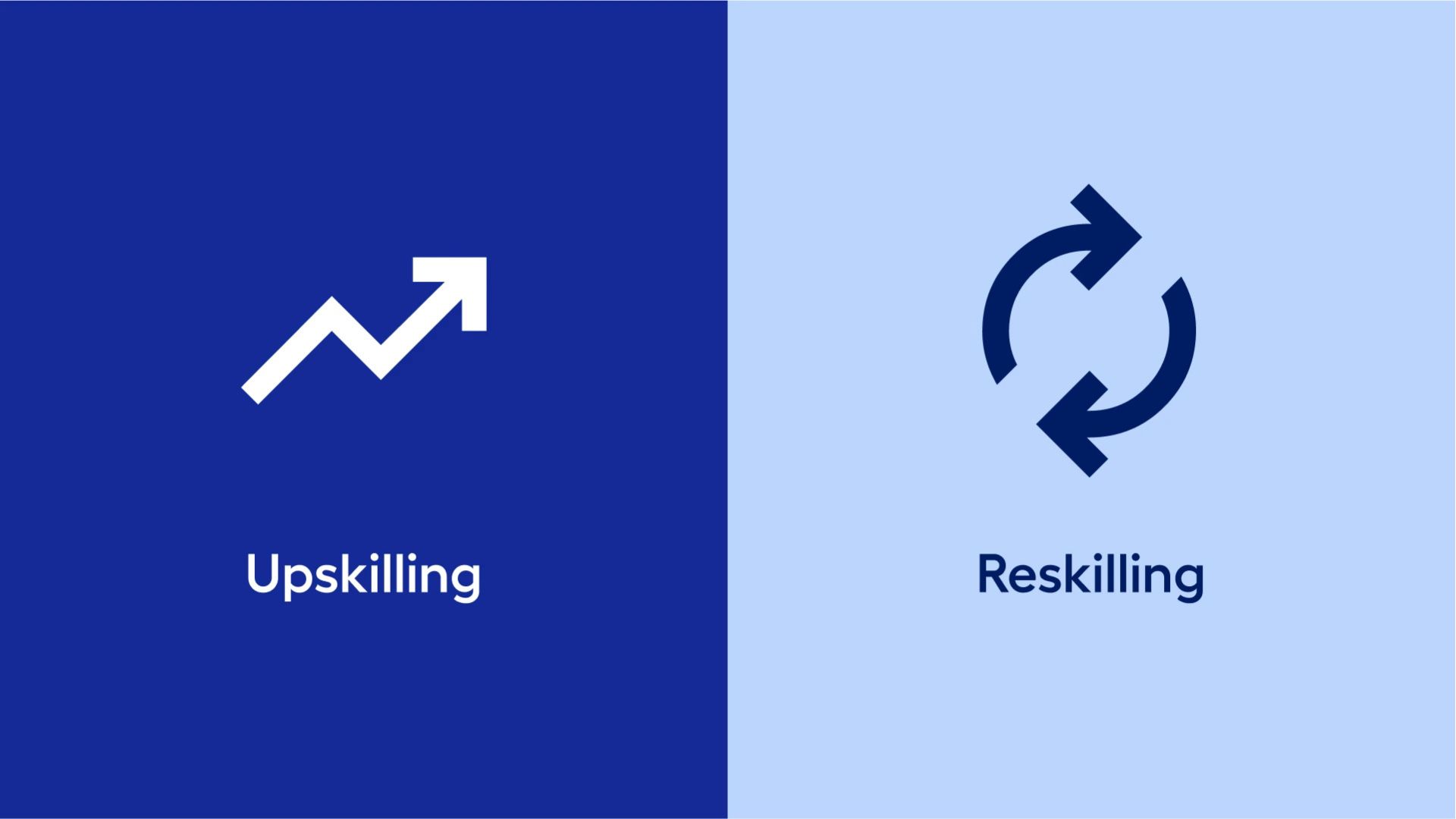
In a world where job roles are evolving faster than Netflix recommendations, the question isn’t if you should learn new skills, it is which path you should take: reskilling or upskilling.
Both are essential strategies for thriving in 2025’s talent economy, but each takes you down a slightly different career path. At DreamShift, we’ve seen firsthand how choosing the right one can make the difference between stagnation and success.
So let’s unpack the difference, the data, and how you can strategically choose the right one for your career growth this year.
What Is Upskilling?
Upskilling means building on your existing skill set. You stay in the same field but learn new tools, techniques, or technologies to stay relevant.
Think of it as upgrading your “career operating system” rather than switching to a whole new one.
Example:
A marketing manager learning AI-powered analytics tools or automation platforms is upskilling, not changing industries.
The Data Behind Upskilling
According to the LinkedIn Learning 2024 Workplace Report, 89% of L&D professionals believe upskilling employees helps companies stay competitive amid technological change. Similarly, the World Economic Forum’s Future of Jobs Report (2023) predicts that by 2027, 44% of workers’ core skills will change, emphasizing upskilling as a corporate necessity, not a luxury.
What Is Reskilling?
Reskilling, on the other hand, involves learning entirely new skills to move into a different role or industry, often triggered by automation, redundancy, or career reinvention.
Example:
A retail professional retraining in cybersecurity or digital marketing is reskilling; moving from one domain to another.
The Data Behind Reskilling
The OECD (2024) Employment Outlook estimates that over 1 billion workers globally will need reskilling by 2030. The McKinsey Global Institute further found that 94 million jobs could be displaced due to automation by 2025, reinforcing why reskilling programs are booming worldwide.
Reskilling vs. Upskilling: The Key Differences
Aspect | Upskilling | Reskilling |
Goal | Deepen existing expertise | Shift to a new role or industry |
Scope | Builds on current strengths | Requires learning from scratch |
Ideal For | Professionals wanting promotion or adaptability | Professionals seeking a career change |
Duration | Short-term (weeks/months) | Medium to long-term (months/years) |
Outcome | Future-proofing your position | Future-proofing your career |
Both are crucial in the age of AI, automation, and skill inflation. The right choice depends on your goals: stay relevant or pivot entirely.
The 2025 Workforce Landscape: Why Now Is the Time
The year 2025 marks a turning point. According to the World Economic Forum, 85 million jobs may be displaced by automation yet 97 million new roles will emerge that are more skill-based and human-centric.
That’s a net positive shift — if you’re ready to learn.
At DreamShift, we see this trend reflected in the surge of clients pursuing micro-credentials and short courses, targeted programs that allow you to upskill or reskill without stepping away from your job.
Check out our article on Micro-Credentials from Australia for a deeper look at how these short courses are redefining professional education in 2025.
And if you’re serious about re-engineering your career trajectory, explore the DreamShift Resource Library — your go-to hub for curated learning, skill frameworks, and expert-backed career insights.
Which Path Leads to a Better Career in 2025?
If your current field is evolving but not disappearing, upskilling is your best bet. It helps you stay competitive, climb the ladder, and demonstrate initiative, especially in industries like tech, finance, and marketing.
But if your industry is being phased out or automated, reskilling is the strategic move. You’ll reinvent yourself entirely, often into a field that’s more future-proof and digitally oriented.
In 2025, career success isn’t about chasing job security, it’s about staying relevant and visible in a skills-driven marketplace.
The DreamShift Advantage: From Learning to Interview
Here’s where most professionals struggle, knowing what to learn is easy; turning that knowledge into career leverage is harder.
That’s where DreamShift comes in. We don’t just help you learn; we help you showcase your growth effectively with expertly written CVs, tailored positioning, and we give you a Job Interview Guarantee in 60 Days because learning should lead to real results.
🎯 Ready to accelerate your next career shift?
Book a Call Now with DreamShift — and start turning your upskilling or reskilling journey into tangible career opportunities.
Key Takeaways
- Upskilling enhances your current career path, while reskilling prepares you for a new one.
- By 2025, nearly half of all work-related skills will evolve (WEF, 2023).
- Both strategies are essential in an AI-driven, rapidly changing workforce.
- Leverage micro-credentials and short courses to adapt fast.
- DreamShift helps professionals turn learning into career outcomes — with a 60-day job interview guarantee.