Key takeaways
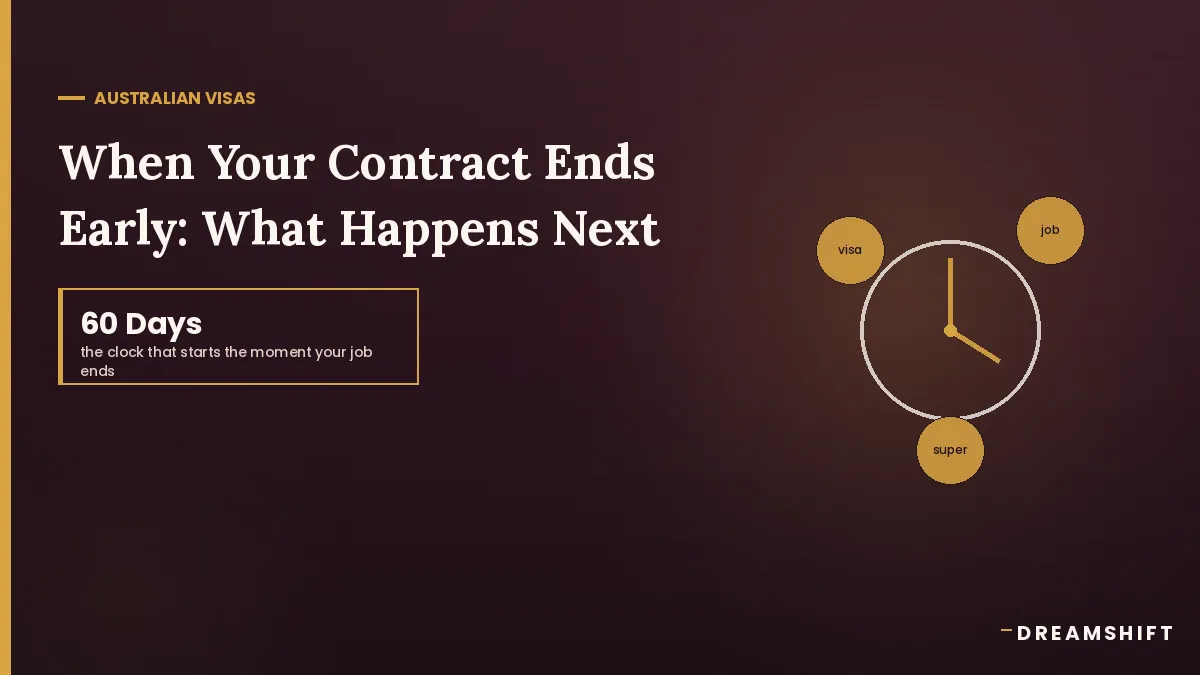
- On a 482 visa, condition 8607 gives you 60 consecutive days to find a new sponsor, get a different visa, or arrange to leave - miss that window and the visa can be cancelled.
- Whatever has already been paid into your super stays there and keeps accumulating - losing your job doesn't reduce or remove what's already been contributed.
- Your former employer must notify the Department of Home Affairs within 28 days of your employment ending - it's worth asking them in writing to confirm they've done it.
Getting let go, or having your employer close down, is stressful for anyone. If you're on a sponsored visa, it's worse, because suddenly three separate things are in question at once: your income, your visa status, and your superannuation. Here's exactly what happens to each one, and what to do in the first 60 days.
Your visa: the 60-day clock
If you're on a 482 (Skills in Demand) visa, your visa comes with a condition (condition 8607) that says you can't be out of work for more than 60 consecutive days.
That doesn't mean you have 60 days to relax. It means that within those 60 days, you need to have done one of three things:
Found a new sponsoring employer. You can start job hunting immediately, but you legally can't start working for a new employer until their nomination for you is approved. Lining up interviews fast matters here.
Been granted a different visa. This might be a visitor visa, a different work visa, or another pathway you're eligible for.
Made arrangements to leave Australia. If neither of the above is realistic, you need a plan to depart before the 60 days run out.
If none of these happen within the window, you're in breach of your visa condition, and the Department of Home Affairs can cancel your visa. This is genuinely the most important clock running, so don't let the other two issues (job and super) distract you from it.
Your former employer's obligations
Your employer isn't off the hook the moment your contract ends. They're required to notify the Department of Home Affairs within 28 calendar days of your employment ending, stating when it ended or is expected to end.
This matters to you because it's part of the official record of your situation. If you're applying with a new sponsor, having clean, documented timing on your side helps avoid confusion later. It's worth asking your former employer, in writing, to confirm they've made this notification.
One thing that won't change: the nomination fee your original employer paid to sponsor you is generally non-refundable to them. That's their cost to absorb, not yours, but it's useful context if there's any awkwardness about "wasted" sponsorship costs. It's their legal obligation, not a favour they did you.
Your superannuation: it doesn't disappear
Whatever has already been paid into your super fund stays there. Losing your job doesn't reduce or remove what's already been contributed. It's preserved, exactly like it would be for an Australian citizen who changed jobs.
Two things to actually do here:
Check your super is being paid correctly up to your last day. Your employer owes you super on everything you were paid, including any final leave payouts that count as ordinary time earnings. Log into your super fund account or check your latest payslip to confirm the final contribution lands.
Decide what happens to it next, based on what you do next. If you find a new sponsor and keep working in Australia, your super just keeps accumulating as normal, you don't need to do anything. If you end up leaving Australia permanently because the visa situation doesn't work out, you'll likely be eligible to claim your super back as a Departing Australia Superannuation Payment (DASP) once you've left and your visa has ceased. That's a separate process, and it comes with its own tax rules, so it's worth getting that right rather than rushing it.
Your first week: a practical order of operations
When this happens, do things in this order:
Day 1-2: Confirm in writing when your employment officially ends, and ask your employer to confirm they'll notify the Department within 28 days. Check your final pay and super contribution will be processed correctly.
Day 2-7: Start applying for roles immediately, specifically with employers who are open to sponsorship. Don't wait to see how you feel, the 60-day clock doesn't pause for that.
Within 2 weeks: If nothing is close to landing, talk to a registered migration agent about your other visa options. Don't wait until day 50 to start this conversation, these processes take time.
Throughout: Keep a folder with your termination letter, final payslip, super statements, and any correspondence with your former employer. You'll likely need these documents for your next visa application, regardless of which path you take.
The bottom line
Three clocks start running the moment your contract ends: your visa condition, your employer's notification obligation, and your own financial planning around super. The visa clock is the one that can genuinely end your time in Australia if you miss it, so it comes first. Your super isn't at risk, but it's worth getting the final contribution and your next steps right.
If this is happening to you right now, don't try to work through the visa and job search timing alone. Get in touch with DreamShift, we can help you move fast on both the job search and the paperwork side.