Key takeaways
- Answer the "do you need sponsorship" question directly and briefly, then stop. Extra justification or apology reads as uncertainty, not honesty.
- Know your own numbers before the interview, like the typical 6-10 week nomination timeline. Specificity reads as experience; vagueness reads as risk.
- Don't bring up your visa unprompted in the first five minutes, and never apologize for needing sponsorship, it's a standard business process, not a personal burden.
Almost every migrant candidate faces this moment: an interviewer asks about your visa status, and your voice changes. You get a little quieter, a little more apologetic, like you're explaining a weakness rather than answering a logistics question. Interviewers notice that shift, and it affects how confident they feel about you, far more than the visa fact itself does. Here's how to handle it so it reads as a non-issue, because that's what it actually is.
Why your tone matters more than your answer
Interviewers ask about visa status to plan, not to judge. They need to know what's required on their end and roughly how long it takes. If you answer with hesitation or over-explanation, it signals that you're unsure of your own situation, which makes the interviewer unsure too. If you answer the way you'd state your years of experience, flat, factual, confident, it reads as a settled detail, not an open problem.
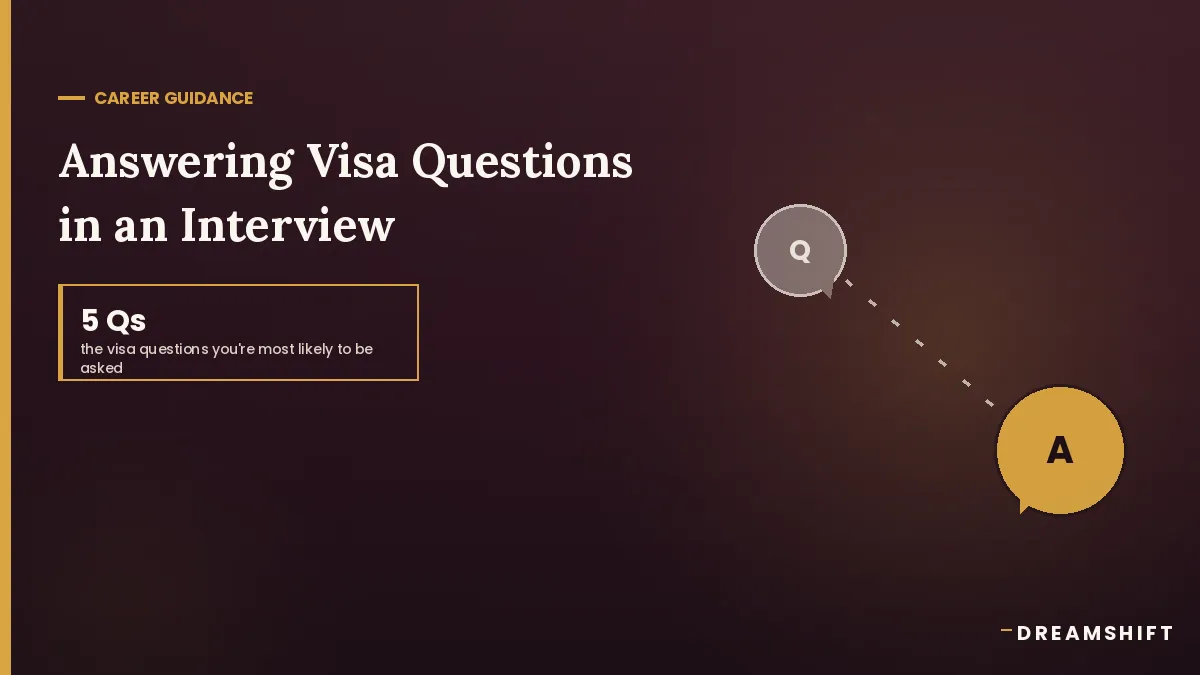
The questions you'll actually get, and how to answer them
"Do you require visa sponsorship to work in Australia?" Answer directly and briefly: "Yes, I hold a [visa type] and would need my employer to sponsor my nomination to continue in this role. I'm familiar with the process and timeline." Stop there. Don't add extra justification or apology, a complete, confident sentence is a complete, confident answer.
"How long does that process usually take?" This is your chance to show preparation. "Typically 6 to 10 weeks from lodgement, depending on the occupation and processing times at the time." If you don't know the specifics for your situation, it's worth finding out before interviews, not during one.
"Have you been sponsored before?" If yes, this is a strength, say so plainly: "Yes, my current employer has sponsored me, so the process is familiar to both me and whoever manages it on your end." If no, be honest, but redirect to what you do know: "This would be my first sponsorship, but I've researched the process thoroughly and I'm ready to work with your team on it."
"What happens if your current visa or job situation changes?" This question is often really asking "are you a flight risk, or at risk of losing your ability to work." Answer the real concern: focus on your commitment to building a career in Australia and, if relevant, your pathway toward permanent residency, rather than getting lost in visa technicalities.
"Why should we go through this process instead of hiring someone who doesn't need sponsorship?" This is sometimes asked directly, sometimes implied. Answer with your value, not a defence of your visa: "Because of what I bring to this specific role," then give your strongest, most relevant example. The visa logistics are secondary to the hire. Let your answer reflect that priority.
What to avoid
Don't over-explain unprompted. If they haven't asked, don't bring it up in the first five minutes to "get it out of the way." It reads as anxiety, not transparency. Let the conversation unfold naturally, most interviewers will ask when it's relevant to them.
Don't apologize for needing sponsorship. "Sorry, I know this is extra work for you" undercuts everything else you've said. It's a standard business process for sponsoring employers, not a burden you're personally imposing.
Don't guess at legal details you're unsure of. If asked something genuinely outside your knowledge, "I'd want to confirm the exact detail with a migration agent, but broadly, here's how it works" is an honest, competent answer. Guessing and getting it wrong is worse than admitting you'd check.
The bottom line
The visa conversation in an interview is a planning question, not a character test. Prepare your answers the same way you'd prepare for a technical question, know the facts, state them plainly, and move on. The calmer and more specific you are, the less "issue" there is for the interviewer to worry about, because there genuinely isn't one.
If you want to practice these exact questions out loud before your next interview, that's part of what we run through with clients at DreamShift, it makes a bigger difference than people expect.