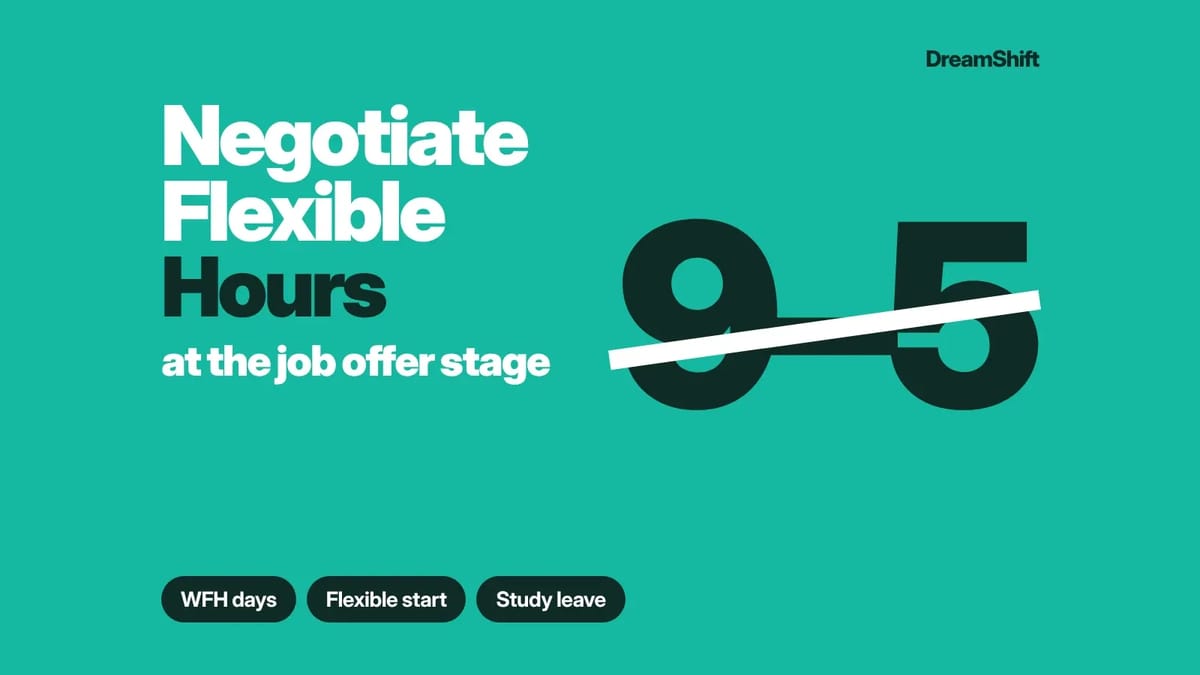
Receiving a job offer is an exciting milestone, but the negotiation phase can feel intimidating—especially when you want to ask for non-salary terms like work-from-home days, flexible start times, or study leave. Many professionals worry that bringing up personal commitments might make them appear uncommitted or even cause the employer to rescind the contract.
In the Australian employment market, learning how to negotiate flexible working hours after receiving a written offer is a standard, respected part of contract discussions. The secret lies in your timing and positioning: you must frame your requests around productivity, clear performance metrics, and mutual value.
Here is your step-by-step framework to successfully negotiate flexible working hours during the job offer phase without jeopardizing your deal.
Why You Must Wait for the Job Offer Phase
Timing is everything when you plan to negotiate flexible working hours.
Never bring up work-life requirements, study arrangements, or hybrid schedules during your initial job interviews. During early interview rounds, your sole focus should be proving your technical capability, cultural fit, and enthusiasm for the role.
Once the employer extends a formal written offer, the hiring dynamic shifts. The company has invested time and resources into selecting you as their preferred candidate. This post-offer window gives you maximum leverage to negotiate flexible working hours because the employer is already committed to bringing you on board.
3 Steps to Negotiate Flexible Working Hours Successfully
1.Express Enthusiasm and Secure the Base Offer:Lock in mutual commitment before discussing schedule tweaks.
Start by verbally thanking the hiring manager for the offer. Express genuine excitement about the position and confirm your alignment with the core responsibilities and salary structure before introducing schedule adjustments.
2.Frame Flexible Hours Around Productivity:Connect your requested schedule to high performance.
When you negotiate flexible working hours, show how your preferred schedule enhances your output. Explain that uninterrupted work-from-home days or specific start times allow you to deliver deeper focus and better business results.
3.Propose a Trial Period to Reduce Risk:Keep your requests reasonable and testable.
If an employer hesitates, lower their perceived risk by offering a 90-day trial period. Agree to review the flexible arrangement during your probation check-in to prove that performance remains high.
How to Present Specific Flexible Work Requests
Different flexible arrangements require tailored scripts when you negotiate flexible working hours with an Australian employer:
1. Hybrid & Work-From-Home (WFH) Days
"I am thrilled about the offer and eager to join the team. To ensure I can balance cross-team collaboration with uninterrupted deep-focus tasks, I would like to explore a hybrid arrangement of three days in the office and two days working from home. This will allow me to dedicate solid blocks of time to complex project deliverables."
2. Flexible Start and Finish Times
"Because I commute from [Location] and want to optimize my daily focus, I would love to discuss shifting my core hours slightly to 8:00 AM – 4:30 PM. This schedule helps me avoid peak travel delays, ensuring I arrive energized and fully accessible for our morning standups."
3. Study Leave & Professional Development
"I am currently pursuing a postgraduate qualification in [Field/Subject], which directly enhances my technical work here. I would like to ask for approval to take 2 hours of study leave on Friday afternoons during term time. I will ensure all key deliverables are completed ahead of schedule."
Pro Tips for Australian Employment Market Standards
Australian workplace regulations heavily support flexible work arrangements, provided business needs are met. Keep these guidelines in mind when you negotiate flexible working hours:
- Pro tip - Cite local standards: Mention that hybrid schedules (such as 2–3 WFH days) are widely adopted across Australian workplaces to highlight that your request is standard practice.
- Pro tip - Get final terms in writing: Once the hiring manager agrees to your schedule, ensure the flexible working clauses, study leave allowances, or hybrid arrangements are included as an addendum to your formal employment contract.
Frequently Asked Questions
Can an employer rescind a job offer if I try to negotiate flexible working hours?
It is extremely rare for a professional employer to rescind an offer simply because you politely asked for flexible arrangements. As long as your request is reasonable and framed professionally, the worst outcome is usually a simple "no" or a counter-offer.
What if the company has a strict 100% in-office policy?
Ask if there is room for flexibility after your initial 90-day probation period. Demonstrating your value in person first makes it easier to negotiate flexible working hours later on.
Should I accept a lower salary in exchange for flexible working hours?
No. In most cases, flexible arrangements should not require a pay cut if you are maintaining full-time output.Focus on proving that your output remains identical regardless of your physical desk location.
Secure Your Ideal Career Strategy in Australia
Knowing how to negotiate flexible working hours empowers you to build a career schedule that supports your personal development, education, and work-life balance.
If you are navigating job offer negotiations, optimizing your application strategy, or transitioning into the Australian job market, DreamShift is here to help. We have supported over 200 migrants in landing competitive roles across Australia with ATS-optimised CVs, LinkedIn profile overhauls, and a 60-day interview guarantee.
Book a Free Consultation today to speak with a career strategist, or access our free Aussie Job Toolkit to prepare your negotiation roadmap.