Behavioral interview questions can feel like a minefield. When an interviewer asks, "Tell me about a time you made a mistake" or "How do you manage a difficult stakeholder?", vague answers will not cut it. Australian employers want clear evidence of how you think, communicate, and solve problems under pressure.
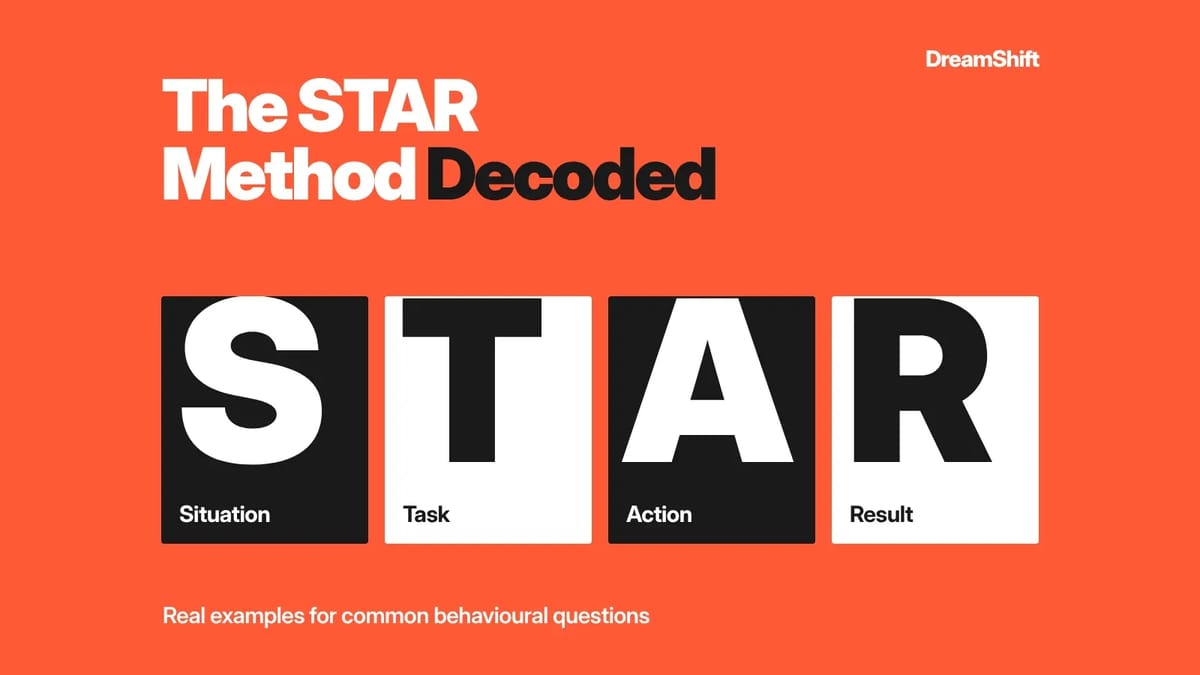
The STAR method (Situation, Task, Action, Result) is the standard formula for structuring concise, impactful answers. Here is a clear breakdown of the framework, complete with fill-in-the-blank scripts for two of the toughest behavioral questions you will face.
What Is the STAR Method?
The STAR method ensures your behavioral answers tell a structured, engaging story without rambling.
- Situation (15% of your answer): Set the context. Briefly state the project, company, or challenge.
- Task (15% of your answer): Define your specific responsibility or the problem you needed to resolve.
- Action (50% of your answer): Highlight what you did. Describe the exact steps, soft skills, and tools you used.
- Result (20% of your answer): Share the outcome using clear data, metrics, or positive business impact.
High-Pressure Question 1: Handling a Difficult Stakeholder
Employers ask this to test your conflict resolution, emotional intelligence, and cross-team communication in fast-paced workplaces.
Fill-in-the-Blank Script
Situation: At [Company Name], we were delivering a [type of project] with tight deadlines, and a key stakeholder from the [Department Name] team was unhappy with [specific disagreement or delay].
Task: My responsibility was to address their concerns, align expectations across both teams, and keep the project schedule on track.
Action: I arranged a brief one-on-one meeting to actively listen to their concerns. I identified that their main issue was [root cause, e.g., lack of visibility on updates]. To resolve this, I implemented [action taken, e.g., a weekly progress dashboard] and adjusted our workflow to incorporate [compromise or solution].
Result: As a result, we re-engaged the stakeholder, delivered the project [on time / X% faster], and improved cross-department communication for future sprints.
Pro Tip
Keep the emphasis on your actions rather than placing blame on the stakeholder. Show empathy while staying focused on business goals.
High-Pressure Question 2: Missing a Deadline or Making a Mistake
Interviewers ask this question to evaluate your accountability, problem-solving abilities, and how well you learn from setbacks.
Fill-in-the-Blank Script
Situation: While managing [project or task] at [Company Name], I underestimated the workload required for [specific task component].
Task: As the target date approached, I realized we were at risk of missing our final delivery deadline by [number of days/weeks].
Action: Instead of waiting, I immediately notified my team lead with a mitigation plan. I reprioritized core deliverables, delegated [secondary task] to a teammate, and spent extra focus on [critical bottle-neck].
Result: We delivered the core release within [X days] of the original target date without compromising output quality. I then updated our task estimation templates, which prevented similar delays in later projects.
How to Adapt the STAR Method for the Australian Market
Australian hiring managers place high value on team collaboration, direct transparency, and pragmatic problem-solving. Keep these subtle nuances in mind:
- Pro tip - Shift from "we" to "I": While teamwork is valued, interviewers need to know your individual contribution. Clearly outline your specific actions.
- Pro tip - Use local platforms as context: Mention familiar tools and local market norms (such as Jira,SEEK workflows, or local compliance requirements) to make your stories easy to relate to.
Frequently Asked Questions
What if I cannot remember exact numbers for the Result?
Use qualitative metrics or team feedback if exact data is unavailable. For instance, mention how the process reduced client follow-up calls or improved team handoff speed.
How long should a STAR method response be?
Aim for 90 seconds to 2 minutes total. Spend the majority of your time walking through your specific actions.
Can I use examples from outside Australia?
Yes. International experience is valuable in the Australian job market as long as you translate key concepts into clear, universal business terms.
Master Your Behavioral Interview Strategy
Structuring your stories with the STAR method is one of the fastest ways to build confidence and perform well in high-pressure interviews.
If you are ready to refine your interview answers, build recruiter-ready applications, and step confidently into your next career move, DreamShift can guide you. We have helped over 200 migrants secure opportunities across Australia with ATS-optimised CVs, tailored LinkedIn strategies, and a 60-day interview guarantee.
Book a Free Consultation today to sharpen your interview technique, or check out our free Aussie Job Toolkit to start building your application strategy.