When your targeted job search stretches longer than expected, financial stress can build quickly. Many skilled migrants and job seekers in Australia face a daunting question: should you take a survival job to pay the bills, or will working outside your target field derail your career progression?
Taking a transitional role in retail, hospitality, customer service, or administration is not a sign of failure—it is a pragmatic financial strategy. However, taking a survival job requires a clear plan so you do not burn out or lose momentum on your primary career goals.
Here is a practical decision tree framework to help you evaluate cashflow runway, format your resume effectively, and maintain your primary job search while working.
1. The Survival Job Decision Framework
Before accepting a transitional role, evaluate your position across three key criteria:
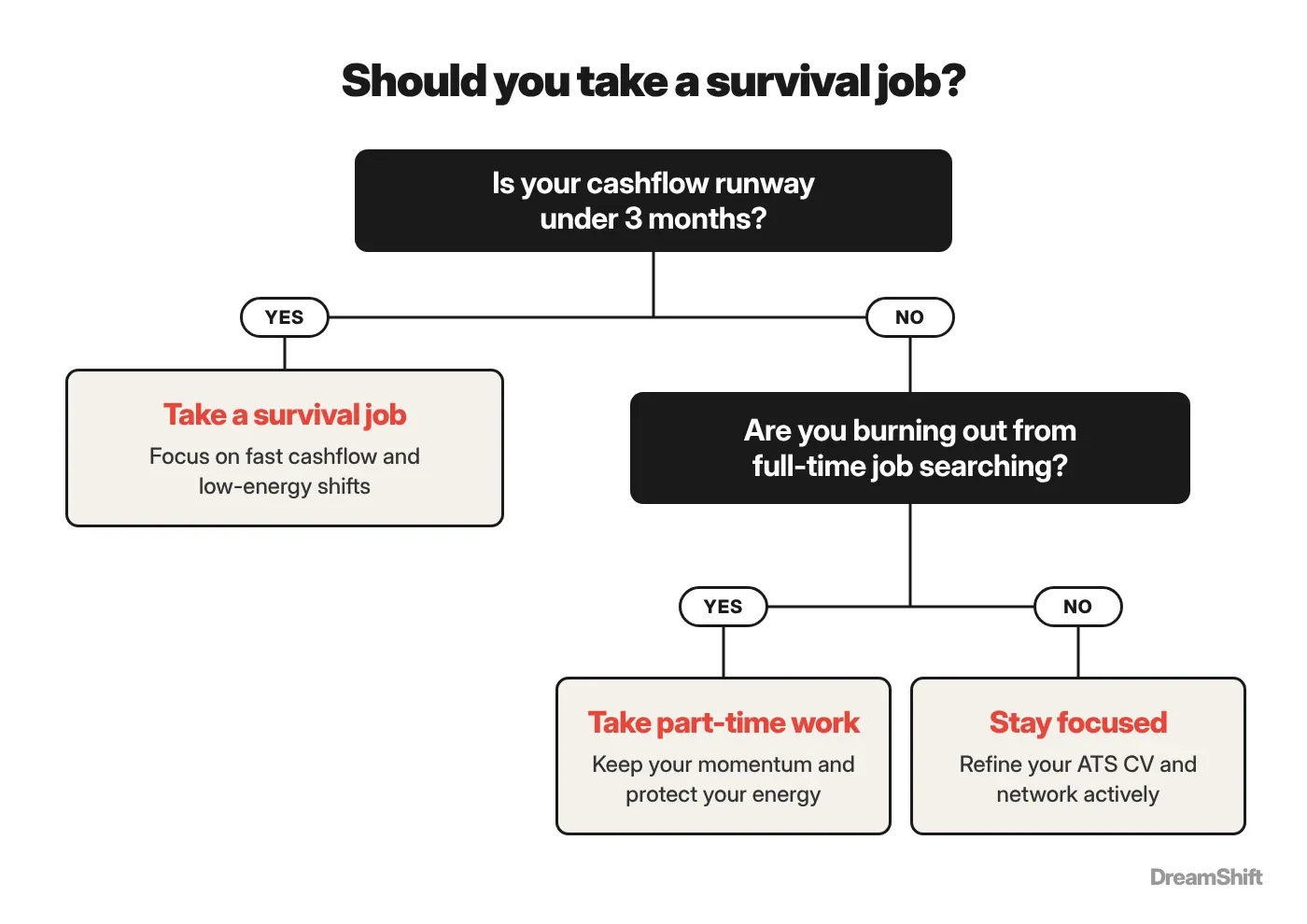
- Financial Runway: If you have less than 3 to 4 months of living expenses saved in AUD, taking immediate work relieves pressure and prevents desperation during interviews.
- Psychological Energy: If prolonged unemployment is causing isolation or severe job-search fatigue, part-time work provides routine, social interaction, and confidence.
- Time Commitment: Ensure the survival job leaves dedicated time blocks during business hours for recruiter calls and interviews.
2. How a Survival Job Reads on an Australian Resume
A common fear is that listing a survival job will make you look underqualified or unfocused. In the Australian market, recruiters respect candidates who show a strong work ethic, provided your resume maintains a clear story.
Strategy A: The Hybrid Resume Structure
If your survival job is unrelated to your target role (e.g., working as a casual barista while seeking a Data Analyst position), divide your experience section:
- Relevant Professional Experience: Place your target industry roles, international background, and major projects at the top.
- Additional / Recent Work History: Place your casual or survival role lower down to account for employment dates without overshadowing your core skills.
Strategy B: Highlighting Transferable Soft Skills
If you include the survival job in your main history, focus on universal workplace capabilities rather than basic tasks:
- Highlight Stakeholder Communication: Managing high-volume customer inquiries under pressure.
- Highlight Process & Safety Compliance: Adhering to strict Australian operational or health standards.
- Highlight Team Collaboration: Working across diverse teams to meet daily operational targets.
3. How to Keep Searching While Working
1.Set Non-Negotiable Application Hours:Prevent work fatigue from stopping your search.
Treat your primary job search as a fixed appointment. Block 1 to 2 hours every morning before your shift (or on dedicated weekdays) strictly for strategic applications and networking.
2.Manage Interview Availability Smartly:Stay accessible for recruiter phone screens.
When applying, specify your phone availability window in cover letters or email signatures. Opt for evening or early morning interview slots, or save leave days for full interview panels.
3.Frame the Role Positively in Interviews:Leverage local workplace context in interviews.
When interviewers ask about your current role, explain it confidently: "I took on a customer-facing role to stay active and immerse myself in local workplace culture while systematically searching for the right corporate opportunity."
Frequently Asked Questions
Will taking a survival job hurt my salary negotiations later?
No. Your target salary should be based on industry benchmarks in Australia and the value of your primary qualifications, not on what you earned in a casual or entry-level survival role.
Should I put my survival job on my LinkedIn profile?
Not necessarily. You can keep your LinkedIn headline and summary focused entirely on your primary profession, while listing your survival job under experience if you want to avoid employment gaps.
What types of survival jobs are best for job seekers?
Look for roles with shift flexibility, low mental drag after hours, or direct exposure to local business operations - such as evening customer support, receptionist work, or part-time event coordination.
Build a Sustainable Career Transition Plan
Deciding should you take a survival job comes down to protecting your financial stability while maintaining focus on your long-term career trajectory.
If you are navigating a prolonged job search, optimizing your application strategy, or positioning international experience for Australian employers, DreamShift can guide you. We have helped over 200 migrants secure target roles across Australia with ATS-optimised CVs, LinkedIn profile overhauls, and a 60-day interview guarantee.
Book a Free Consultation today to sharpen your job search, or explore our free Aussie Job Toolkit for ready-to-use application templates.
Sources
- Australian Government Department of Employment and Workplace Relations
- SEEK Career Advice - Managing Employment Gaps & Work Experience